General Secretary of COMECE receives EULEMA President in Brussels
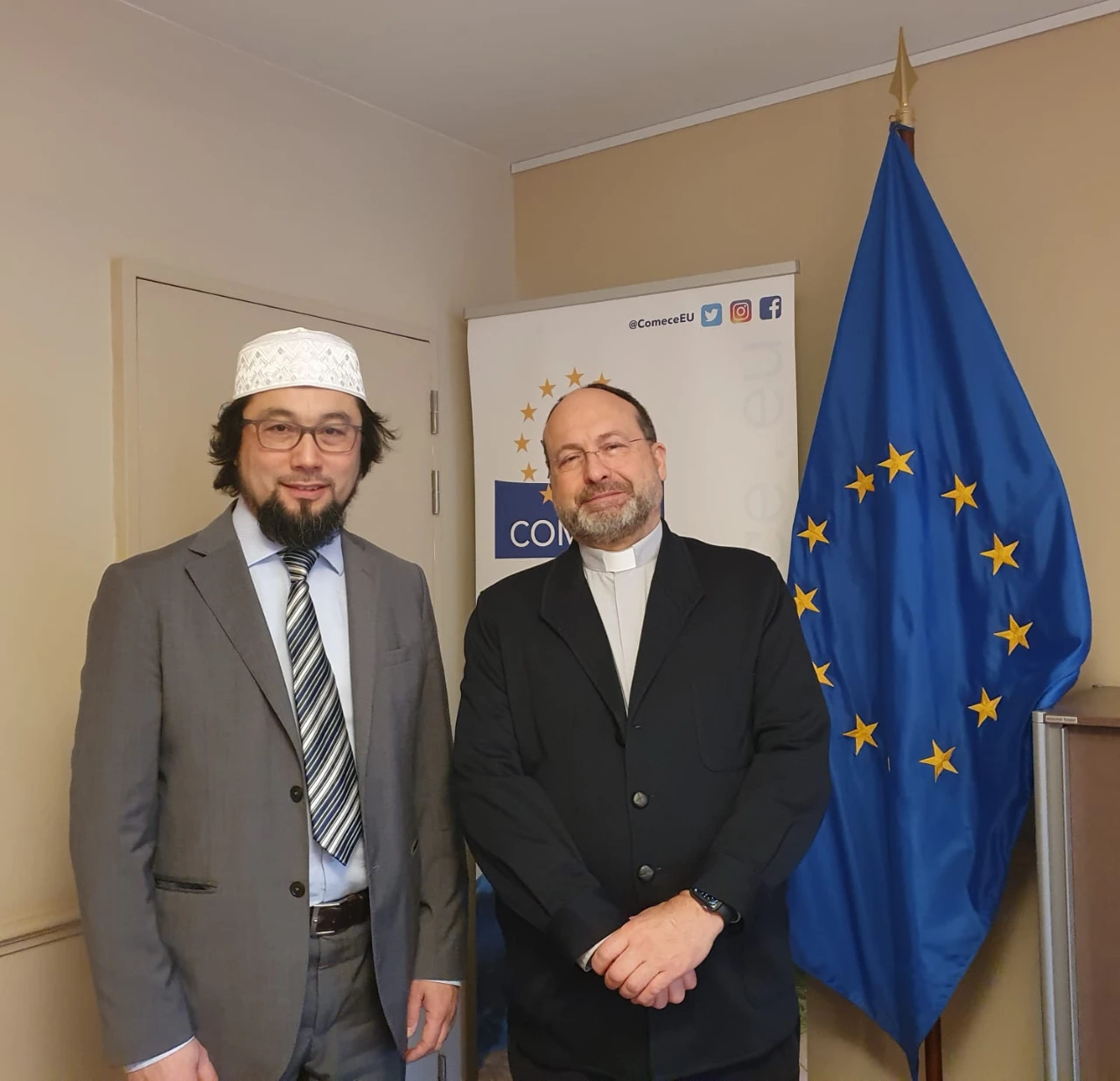
Rev. P. Manuel Enrique Barrios Prieto, General Secretary of COMECE, the Commission of the Bishops’ Conferences of the European Union, received imam Yahya Pallavicini, President of EULEMA European Muslim Leaders Council, in COMECE headquarters in Brussels.
Following their first meeting in 2022 during a session of Article 17 at the European Parliament this meeting goes in the direction to develop a brotherly cooperation between EULEMA and COMECE receiving inspiration and experience in a common engagement on Religious Freedom in Europe. Imam Yahya Pallavicini underlined the need to increase a better understanding about religions in Europe avoiding conflicting polarizations promoted by some ideologies of aggressive secularization that provoke islamophobia, anticlerical hatred, and antisemitism.
The President of EULEMA proposed a public conference in Brussels together with COMECE in 2024, in the occasion of the UN International Day of Human Fraternity, to present comments in Europe on the outcomes of the historic document signed in Abu Dhabi by Pope Francis and shaykh al-Azhar, imam Ahmed al-Tayyeb, five years before.
Rev. Barrios Prieto will be invited later this year, during the Spanish Presidency of the Council of the European Union, to the EULEMA General Assembly in Seville. “EULEMA is organizing a meeting with the CER Conference of European Rabbis, and we hope to invite COMECE to share their wisdom on interreligious dialogue and the promotion of an added value to the culture and soul of Europe”. Imam Pallavicini also shared with COMECE General Secretary the concern with several EULEMA founding members of some violent persecutions of Christians in Africa and Asia as well as some recent provocative actions against Muslims in Europe and the burning of a copy of the Koran. Mons. Barrios agreed that this has nothing to do with “freedom of expression as it is a sign of disrespect, hatred and ignorance”. The respect of religious symbols and practice is part of a civil society and a wise political management of democracy and fundamental rights.