European Muslim Leaders Council stand with International Orthodox Rabbinical Coalition against Gaza humanitarian crisis
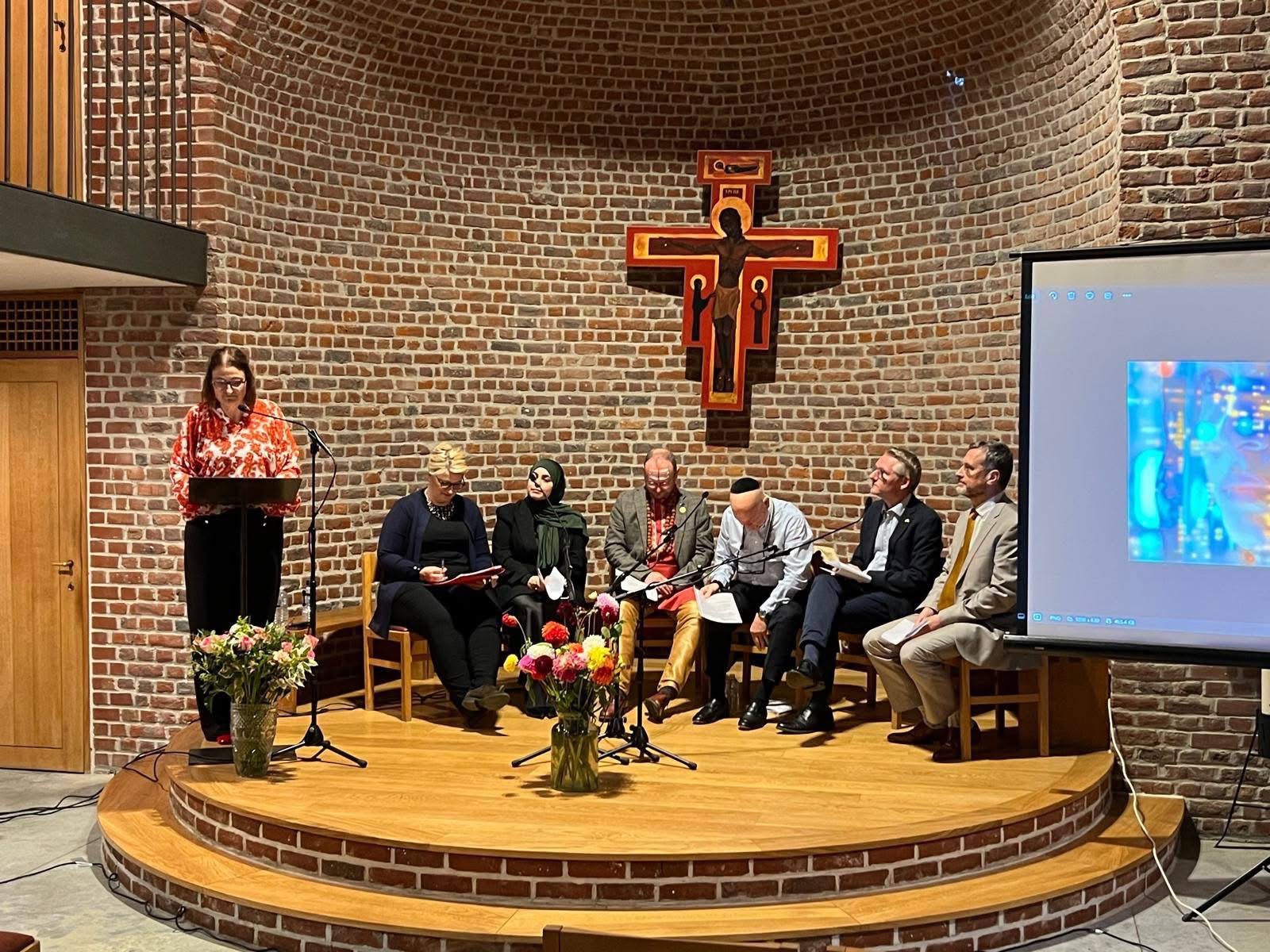
Friday, August 22, EULEMA, the European Muslim Leaders Majlis, received the text of an appeal written by many international Orthodox rabbis, with a courageous and coherent call to address Gaza starvation crisis and condemn settler violence. We support this shared duty to bear witness to the moral clarity of religious leaders, proposed by several masters of contemporary Judaism. Among them, we extend a fraternal greeting to our friends, Rabbis Melchior, Rosen, and Schudrich, Hofemeister, historic companions in dialogue between Jews and Muslims in Europe and around the world.
The coincidence with Pope Leo XIV’s invitation to prayer and fasting for the disarmament of conflicts and for peace, brings us together, even as European Muslims, in the responsibility of every religious leader as an authentic interpreter of the Word of God in serving the blessing of the common principle of a “Divine image” to “practice kindness, justice, and righteousness,” sustained by charity toward the afflicted and a clear dissociation from criminals.
In our Friday sermon in Europe mosques, we continue praying for the survival of Palestinian families in Jerusalem and Gaza and for the unconditional release of Israeli hostages, while we call on politicians to disarm terrorists and to avoid militarily exterminating the dignity and life of innocent people.
Best regards and wishes for Peace.
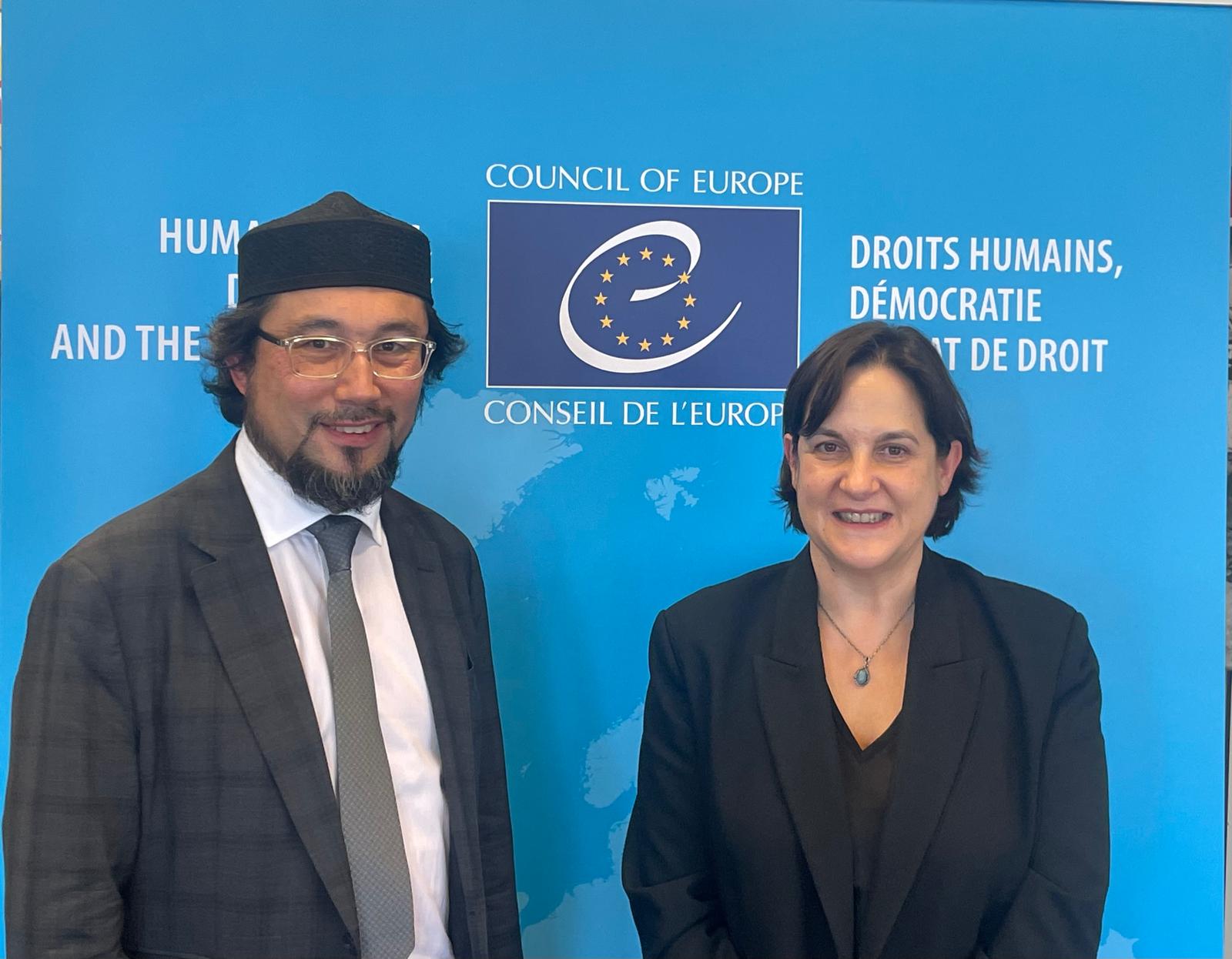
EULEMA Board members: Imam Yahya Pallavicini, mufti Nedzad Grabus, imam David Munir, Suaad Onniselka, Amina Baghajati
INTERNATIONAL COALITION OF ORTHODOX RABBINICAL LEADERS URGE ISRAEL TO ADDRESS GAZA STARVATION CRISIS AND CONDEMN SETTLER VIOLENCE
A Call for Moral Clarity, Responsibility, and a Jewish Orthodox Response in the Face of the Gaza Humanitarian Crisis
The humanitarian crisis unfolding in Gaza is one of the most severe in recent history. While it began with the horrific terrorist attack by Hamas on Israel on October 7, 2023—a brutal act that justifiably demanded a strong military response and demand for the release of the hostages—this does not absolve Israel’s government from assuming its share of the responsibility for the profound suffering of Gaza’s civilian population.
Hamas’s actions have repeatedly shown a cynical disregard for the lives of the people it claims to represent, using civilians as human shields and rejecting ceasefire proposals. However, Israel’s prolonged military campaign, now approaching two years, has devastated Gaza. The death toll is rising with very significant losses of lives, and Israel’s limiting of humanitarian aid, at times completely halting the entry of food and medical supplies, has raised the specter of coming starvation. We affirm that Hamas’s sins and crimes do not relieve the government of Israel of its obligations to make whatever efforts are necessary to prevent mass starvation.
There have been months when Israel blocked humanitarian convoys on the mistaken premise that increased suffering would bring about Hamas’s surrender. Instead, the result has been the deepening of despair. The justified anger toward Hamas has dangerously expanded by some extremists into blanket suspicion of the entire population of Gaza—children included—tarnished as future terrorists. Meanwhile, in Yehuda and Shomron (the West Bank), extremist settler violence has resulted in the murder of civilians and has forced Palestinian villagers from their homes, further destabilizing the region.
Amid this devastation, the absence of a clear post-war vision from Prime Minister Netanyahu has allowed the most extreme voices in the Israeli government—including ministers from the religious Zionist community—to fill the vacuum with disturbing proposals. These include the forced “voluntary” exile of Palestinians from Gaza and the sacrifice of remaining Israeli hostages in the pursuit of an elusive “total victory.”
This moment demands a different voice—one grounded in our deepest Jewish values and informed by our traumatic history of being victims of persecution.
Orthodox Jewry, as some of Israel’s most devoted supporters, bears a unique moral responsibility. We must affirm that Judaism’s vision of justice and compassion extends to all human beings. Our tradition teaches that every person is created b’tzelem Elokim—in the Divine image. We are the spiritual descendants of Avraham, chosen to walk in the path of Hashem, “to do righteousness and justice” (Bereshit 18:19). Allowing an entire people to starve stands in stark contrast to this teaching.
As we reflect on Tisha B’Av, the words of our prophets ring with renewed urgency. The Haftorah of Shabbat Chazon reminds us: “Zion shall be redeemed through justice, and those who return to her through righteousness” (Yeshayahu 1:27). And on the morning of Tisha B’Av, the voice of Yirmiyahu echoes through our prayers: “Let not the wise glory in their wisdom…but in this: that they understand and know Me, that I am the Lord who practices kindness, justice, and righteousness on the earth—for in these I delight” (Yirmiyahu 9:23).
These are not just poetic phrases. They are the foundations of our ethical obligation—to demand policies that uphold human dignity, to provide humanitarian aid wherever possible, and to speak out when our government’s actions contradict the Torah’s moral imperatives, no matter how painful this may be to accept.
The future of Israel depends not only on its military strength but on its moral clarity. Let us be resounding voices for justice, righteousness, and peace for all people—even and especially in the hardest of times.
List of signatories:
- Rabbi Yosef Blau
- Rabbi David Bigman
- Chief Rabbi Michael Schudrich
- Chief Rabbi Michael Melchior
- Chief Rabbi Jair Melchior
- Rabbi Joav Melchior
- Chief Rabbi David Rosen (former CR)
- Rabbi Dr. Shmuly Yanklowitz
- Rabbi Dr. Yitz Greenberg
- Rabbi Hyim Shafner
- Rabbi Daniel Landes
- Rabbi Herzl Hefter
- Rabbi Shua Mermelstein
- Rabbi Yoni Zolty
- Rabbanit Mindy Schwartz Zolty
- Rabbi Frederick L Klein
- Rabbi Yosef Kanefsky
- Rabbi Michael Whitman
- Rabbi Dr. Jeremiah Unterman
- Rabbi Barry Dolinger
- Rabbi David Silber
- Rabbi Yonatan Neril
- Rabbi Ysoscher Katz
- Rabbi Isaac Landes
- Rabbi David Polsky
- Rabbi Baruch Plotkin
- Rabbi Mikey Stein
- Rabbi Elliot Kaplowitz
- Rabbi Ariel Goldberg
- Rabbi Ben Birkeland
- Rabbi Ralph Genende
- Rabbi David Glicksman
- Rabbi Dr. Donniel Hartman
- Rabbi Dr. Martin Lockshin
- Rabbi Dr. Pinchas Giller
- Rabbi Avidan Freedman
- Rabbi Daniel Raphael Silverstein
- Rabbi Dr. Shalom Schlagman
- Rabbi Dr. Daniel Ross Goodman
- Rabbi Aaron Levy
- Rabbi Chaim Seidler-Feller
- Rabbi Dr. Mel Gottlieb
- Rabbi Dr. Joshua Feigelson
- Rabbi Jonah Winer
- Rabbi Dr. Michael Chernick
- Rabbi Dr. Eugene Korn
- Rabbi Hanan Schlesinger
- Rabbi Elhanan Miller
- Rabbi Joel Hecker
- Rabbi Michael Gordan
- R. Sofia Freudenstein
- Rabbi David Levin-Kruss
- Rabbanit Myriam Ackermann-Sommer
- Rabba Ramie Smith
- R. Shayna Abramson
- Rabbi Zachary Truboff
- Rabbi David A. Schwartz
- Rabbi David Jaffe
- Rabbi Steve Greenberg
- Rabbi Gabriel Kretzmer Seed
- Rabbanit Rachel Keren
- Rabbi Benyamin Vineburg
- Rabba Dr. Lindsey Taylor-Guthartz
- Rabbanit Leah Sarna
- Rabbi Dr. Wendy Zierler
- Rabbanit Sarah Segal-Katz
- Rabbi Shimon Brand
- Rabba Melissa Scholten-Gutierrez
- R. Emily Goldberg Winer
- R. Dr. Erin Leib Smokler
- Rabba Adina Roth
- R. Dr. Meesh Hammer-Kossoy
- Rabbi Drew Kaplan
- Rabbi Dina Najman
- Rabbi Emile Ackermann
- Rabbi Daniel Geretz
- Rabbanit Sarah Segal-Katz
- Rabbanit Tali Schaum Broder
- Rabbi Max Davis
- Rabbi Tyson Herberger
- Rabbi Professor Samuel Lebens
- Rabbi David Kalb
- Rabbi Schlomo Hofmeister
- Rabbi Ralph Genende